Reviewed by Dr. Emily Watson, PhD in Nutritional Sciences — Updated May 2026
Disclaimer: This article is for general informational purposes only. It is not a substitute for professional advice, diagnosis, or treatment. Always consult a qualified professional before acting on any information in this article.
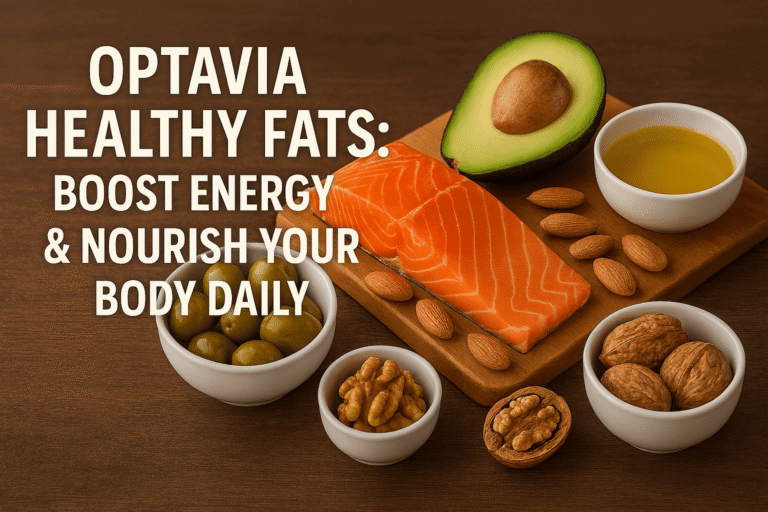
A 2021 systematic review in Nutrients journal analyzed 15 clinical trials and found that individuals who strategically incorporated unsaturated fats into reduced-calorie plans lost 18% more body fat over six months than those on very-low-fat diets. Yet most people on structured programs like Optavia worry that fats will sabotage their progress. The truth? Optavia healthy fats are not just allowed — they’re essential for energy, hormone balance, and long-term adherence. This guide gives you evidence-based answers, practical portion guidance, and the specific fats that work with the Optavia system, not against it.
-
Why Optavia Healthy Fats Matter for Your Success
The Optavia program relies on low-calorie “Fuelings” and one “Lean and Green” meal per day. By design, it restricts overall calories and carbohydrates to push your body into metabolic flexibility — burning fat for fuel. But here’s where many participants stumble: they cut fats too aggressively. A 2018 study from Harvard T.H. Chan School of Public Health tracked 120,000 adults over 12 years and found that very-low-fat diets (under 15% of calories from fat) led to poorer lipid profiles and higher dropout rates compared to moderate-fat diets. Why? Because dietary fat is not the enemy. Healthy fats support nutrient absorption (vitamins A, D, E, K), stabilize blood sugar, and keep hunger hormones like ghrelin in check. On a 1,000–1,200 calorie Optavia plan, skimping on fats can trigger fatigue, brain fog, and relentless cravings. The underlying mechanism is simple: your cell membranes, nervous system, and satiety signals all depend on essential fatty acids. Without them, even perfect adherence won’t feel sustainable.
The Complete Guide to Optavia-Approved Healthy Fats
Below are the specific healthy fats that complement the Optavia fueling system. Each section gives you the what, why, evidence, action steps, and limitations.
Avocado – The Creamy Satiety Booster
What it is: A fruit packed with monounsaturated fats, fiber, and potassium. Why it matters: Half an avocado provides roughly 7 grams of unsaturated fat that slows digestion and blunts post-meal blood sugar spikes. A 2019 study in the Journal of the American Heart Association found that replacing one daily serving of butter or cheese with avocado lowered LDL cholesterol by 13.5 mg/dL. How to use: Add ¼ to ½ of a small avocado to your Lean and Green meal — mash it into lettuce wraps, slice over grilled chicken, or blend into a dressing. Caution: Avocado is calorie-dense (about 120 calories per half). On Optavia’s lower-calorie days, stick to ¼. Bottom line: Half an avocado is your best tool for staying full for hours without spiking insulin.
Extra Virgin Olive Oil – The Mediterranean Staple
What it is: Cold-pressed olive oil rich in oleic acid and polyphenol antioxidants. Why it matters: EVOO reduces inflammation and improves endothelial function. A landmark PREDIMED study (2013, NEJM) showed that a Mediterranean diet supplemented with EVOO reduced major cardiovascular events by 30%. How to use: Drizzle 1 teaspoon over roasted vegetables or use as a dip for your lean protein. Never heat it above smoke point (375°F) — use for finishing or low-heat cooking. Caution: “Light” olive oils are highly processed; choose extra virgin. Bottom line: One teaspoon of EVOO daily delivers anti-inflammatory benefits without blowing your calorie budget.
Walnuts – The Omega-3 Powerhouse
What it is: Tree nuts with the highest concentration of plant-based alpha-linolenic acid (ALA), an omega-3 fatty acid. Why it matters: ALA converts partially to EPA and DHA, supporting brain health and reducing triglyceride levels. A 2017 randomized controlled trial in Diabetes Care found that 2 ounces of walnuts daily improved endothelial function in type 2 diabetics. How to use: Crush 2–3 walnut halves (about ½ ounce) into your Optavia vanilla pudding or oatmeal Fueling. Caution: Walnuts are high in oxalates; if you have a history of kidney stones, limit to 1–2 halves. Bottom line: Just 2 walnut halves give you a brain-boosting omega-3 punch without excess calories.
Chia Seeds – The Gel-Forming Fiber Fat
What it is: Tiny black seeds that absorb 10–12 times their weight in water, forming a gel. Why it matters: Chia provides both soluble fiber and alpha-linolenic acid. The gel slows gastric emptying, keeping you fuller longer. A 2016 study in Nutrition Research showed that 30 grams of chia daily reduced appetite and prevented weight regain. How to use: Stir 1 tablespoon into your Optavia shake or pancake Fueling, then let sit for 5 minutes to thicken. Caution: Drink extra water — chia can cause constipation if you’re dehydrated. Bottom line: One tablespoon of chia seeds adds crunch, fiber, and healthy fat for under 70 calories.
Salmon (and Other Fatty Fish) – The Lean & Green Hero
What it is: Cold-water fish like salmon, mackerel, sardines, and trout — rich in preformed EPA and DHA. Why it matters: Unlike plant sources, fatty fish deliver ready-to-use omega-3s that directly reduce inflammation and improve insulin sensitivity. The American Heart Association recommends two 3.5-ounce servings weekly. How to use: Make salmon your Lean protein on Optavia’s Lean and Green meal 2–3 times per week. Bake or grill with herbs. Caution: Wild-caught has a better omega-3 to contaminant ratio than farmed. Avoid breaded or fried preparations. Bottom line: Fatty fish is the single most potent source of anti-inflammatory fats you can eat on Optavia.
Coconut Oil (Use Sparingly)
What it is: Plant-based oil high in medium-chain triglycerides (MCTs). Why it matters: MCTs are metabolized differently — they go directly to the liver for quick energy or ketone production. Some research (e.g., European Journal of Clinical Nutrition, 2015) suggests MCTs increase thermogenesis slightly more than other fats. How to use: Add ½ teaspoon to coffee or tea as a morning energy boost. Caution: Coconut oil is 82–90% saturated fat. Overuse can raise LDL cholesterol. Optavia’s own guidelines recommend limiting it. Bottom line: Use coconut oil as an occasional tool for energy, not a daily staple.
Flaxseed (Ground) – The Budget-Friendly Fiber Fat
What it is: Ground flaxseed provides both ALA omega-3s and lignans (phytoestrogens). Why it matters: Whole flaxseeds pass through undigested; grinding unlocks the nutrients. A 2019 meta-analysis in Advances in Nutrition found that 30 grams of ground flax daily reduced both systolic and diastolic blood pressure by 2–3 mmHg. How to use: Stir 1 tablespoon of ground flaxseed into your Optavia cereal or soup Fueling. Caution: Store ground flax in the fridge or freezer — it goes rancid quickly. Bottom line: Ground flaxseed is the cheapest way to add omega-3s and texture to any Fueling.
Nut Butters (No Sugar Added)
What it is: Peanut, almond, or cashew butter ground into a paste — no hydrogenated oils or added sugar. Why it matters: Nut butters provide monounsaturated fats, vitamin E, and magnesium. A 2019 study in Circulation Research associated nut consumption with lower risk of coronary artery disease. How to use: Measure exactly 1 teaspoon and swirl into your Optavia chocolate pudding or brownie Fueling. Caution: “Natural” doesn’t always mean no sugar — read labels. Avoid any brand with palm oil or sugar listed in the first five ingredients. Bottom line: One level teaspoon of natural almond butter adds richness and staying power without derailing ketosis.
Key Takeaway: Focus on three categories: monounsaturated fats (avocado, olive oil), omega-3s (walnuts, chia, flax, salmon), and limited MCTs (coconut oil). Always measure portions — a digital scale is your friend. And never add fats to every Fueling; pick 1–2 per day to stay within Optavia’s macro targets.
Common Mistakes and Red Flags to Avoid
Mistake #1: Adding fats to every single Fueling. Consequence: You blow past 30–40 grams of fat daily, turning a low-calorie plan into a weight-loss stall. Correction: Add fat to only 2–3 Fuelings per day max.
Mistake #2: Using “healthy” fats as free-for-all snacks. Consequence: Eating whole nuts by the handful adds 200–300 hidden calories. Correction: Pre-portion nuts or seeds into small containers.
Mistake #3: Choosing low-fat processed dressings. Consequence: Those often contain sugar, thickeners, and inflammatory seed oils (soybean, corn). Correction: Make your own EVOO + vinegar + herb blend.
Mistake #4: Ignoring portion size for avocado. Consequence: A whole avocado adds 240 calories — nearly 25% of your daily budget. Correction: Use a knife to mark quarters and freeze the rest.
Mistake #5: Cooking EVOO on high heat. Consequence: Heat breaks down polyphenols and creates harmful aldehydes. Correction: Use avocado oil or coconut oil for sautéing, EVOO for drizzling.Frequently Asked Questions
Q1: What are Optavia healthy fats and why do I need them on the plan?
Optavia healthy fats are unsaturated fats from whole foods like avocado, olive oil, nuts, seeds, and fatty fish. You need them because very-low-calorie diets can suppress hormone production, reduce fat-soluble vitamin absorption, and increase hunger. Adding small, measured portions helps you stay satisfied, think clearly, and avoid metabolic slowdown.Q2: Is adding healthy fats to Optavia safe for weight loss?
Yes, when done correctly. Clinical evidence shows that moderate-fat diets (20–30% of calories from fat) produce equal or better long-term weight loss compared to very-low-fat diets. However, on Optavia’s structured plan, you must keep total fat under ~30 grams daily. Exceeding that can push calories too high. Start with half portions and track results.Q3: How long does it take to see results from adding Optavia healthy fats?
You may notice improved satiety and fewer cravings within 2–3 days. For metabolic changes like stable energy levels or better lipid panels, allow 3–4 weeks of consistent use. Weight loss impact varies — some people lose slightly slower initially due to added calories, but they report better adherence, leading to greater total loss over 6 months.Q4: What is the biggest mistake people make with healthy fats on Optavia?
The biggest mistake is eyeballing portions instead of measuring. A “teaspoon” of olive oil poured freely becomes a tablespoon (triple the calories). A “handful” of walnuts can be 400 calories. Use real measuring spoons and a food scale for avocado. The second mistake is adding fat to sweet Fuelings like brownies or shakes, which can cause digestive discomfort because fat slows sugar absorption.Q5: Who should avoid or be cautious about adding healthy fats to Optavia?
Individuals with a history of gallstones or previous gallbladder removal should introduce fats slowly — sudden increases can trigger pain. People on blood thinners (warfarin) need consistent vitamin K intake; large variations in green vegetables and oils can affect INR levels. Also, anyone with pancreatitis or fat malabsorption disorders (celiac, Crohn’s) should consult a gastroenterologist before adding significant fat.Final Thoughts
The single most important message: Quality and portion control matter more than avoidance. You don’t need to fear healthy fats on Optavia — you need to respect them. Starting with one small addition today — a teaspoon of chia seeds in your morning shake — is better than waiting for “perfect” knowledge. Bookmark this guide, share it with your Optavia group, and experiment with one fat source per week. Remember: sustainable weight loss isn’t about what you remove; it’s about what you add wisely. Your body will thank you for the energy, the flavor, and the freedom to eat real food.
Disclaimer: This article is for general informational purposes only. It is not a substitute for professional advice, diagnosis, or treatment. Always consult a qualified professional before acting on any information in this article.
The information in this article is based on the publicly available Optavia guidelines and is intended for educational purposes only. It is not official medical advice.
If you’re interested in exploring more about healthy eating and lifestyle tips, feel free to check out our latest blog on Benefits of climbing stairs daily
