Editorial note: This article is prepared for general educational purposes. It has not been medically reviewed unless a qualified reviewer has separately confirmed that review.
Medical disclaimer: This article is for general informational purposes only. It is not a substitute for professional advice, diagnosis, or treatment. Always consult a qualified professional before acting on any information in this article.
What Is Aprajita Phool?
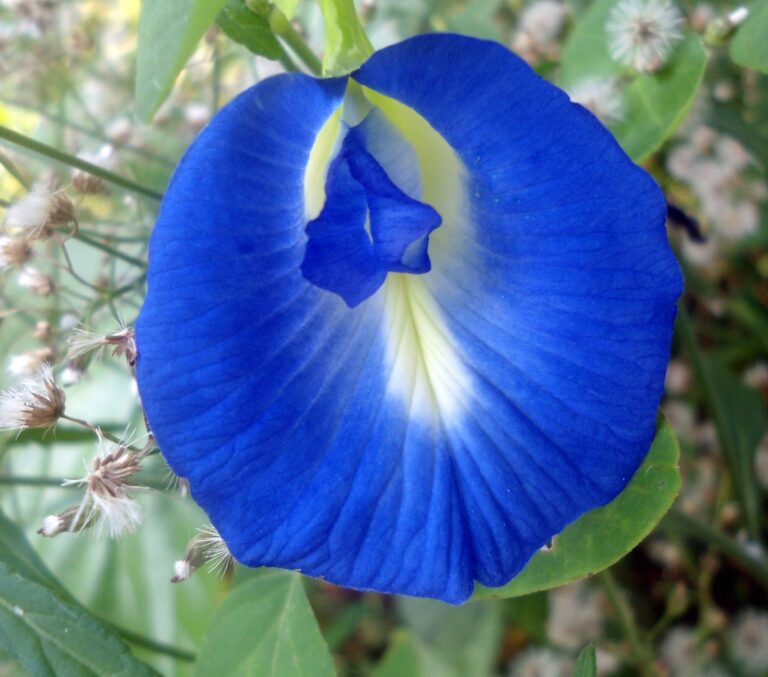
Aprajita Phool, also spelled Aparajita flower, is the flower of Clitoria ternatea, a climbing plant belonging to the legume family. It is commonly known as butterfly pea flower or blue pea flower.
The plant produces striking blue flowers, although white varieties also exist. In India, it is grown in gardens and used in traditional practices. Across parts of Asia, the flower is also used to colour beverages, desserts, and other foods.
The blue colour comes primarily from natural pigments called anthocyanins, particularly a group known as ternatins. These compounds give the flower its distinctive appearance and have attracted scientific interest because of their chemical and antioxidant properties.
A review published in Frontiers in Plant Science discusses butterfly pea flower pigments, their stability, and their potential applications as natural food colourants. Read the scientific review.
Aprajita Phool Benefits: What Does Science Say?
Aprajita Phool has several traditional uses and potential applications, but not every health claim circulating online has been established in humans.
1. Contains Antioxidant Compounds
Butterfly pea flower contains anthocyanins and other plant compounds that demonstrate antioxidant activity in laboratory research.
Antioxidants participate in chemical processes that can limit certain oxidative reactions. However, laboratory findings do not prove that drinking Aprajita flower tea prevents ageing, cancer, or chronic diseases.
What you can do: Enjoy the infusion as part of a varied diet that includes fruits, vegetables, pulses, and other plant foods.
2. May Influence Short-Term Blood Sugar Responses
A 2018 randomized crossover study examined butterfly pea flower extract in 15 healthy men. Researchers observed changes in short-term post-meal glucose and insulin responses when participants consumed the extract alongside sucrose.
The study was small and examined specific beverages under controlled conditions. It does not establish that ordinary Aprajita flower tea treats diabetes or prevents diabetic complications.
What you can do: If you enjoy the tea, consider an unsweetened version instead of a sugary drink. Never replace prescribed diabetes medication with an herbal beverage.
3. Works as a Natural Blue Food Colour
One of the most practical uses of Aprajita Phool is its vibrant blue pigment.
Hot water extracts the flower’s pigments, allowing you to use the infusion in homemade drinks, rice, desserts, and other recipes. The colour may change when you add acidic ingredients such as lemon juice.
What you can do: Add the infusion gradually to food and drinks until you achieve your preferred colour.
4. Offers an Alternative to Sugary Beverages
Unsweetened Aprajita flower tea can add variety to your daily drinks without requiring added sugar.
Replacing a sugar-sweetened beverage with an unsweetened infusion can help reduce added sugar intake. This practical benefit comes from the beverage substitution, not from proven fat-burning effects of the flower.
What you can do: Prepare the tea with water and optional lemon juice. Check packaged products for added sugar and other ingredients.
5. Has Traditional Uses and Research Potential
Different parts of Clitoria ternatea have been used in traditional herbal practices. Researchers have investigated extracts for possible antioxidant, anti-inflammatory, and metabolic effects.
However, many findings come from laboratory and animal research. Extracts may also differ from ordinary tea in concentration and composition.
What you can do: Treat the flower as a culinary ingredient unless a qualified healthcare professional advises you otherwise. Do not use it as a substitute for evidence-based treatment.
A scientific review published in 2021 discusses the flower’s phytochemicals and potential biological activities while identifying the need for more research. Read the review.
The evidence-based takeaway: Aprajita Phool has established culinary applications and promising research potential, but its medicinal benefits remain insufficiently proven for many commonly advertised claims.
How to Make Aprajita Flower Tea at Home
Preparing Aprajita flower tea is simple and requires only a few ingredients.
Ingredients
- 4–6 dried flowers sold specifically for food use
- 200–250 ml hot water
- A few drops of lemon juice, optional
- Honey, optional
Preparation Method
- Place the dried flowers in a clean cup.
- Pour hot water over them.
- Cover and steep for approximately 5–10 minutes.
- Strain the infusion.
- Add a few drops of lemon juice if you want to change the colour and flavour.
- Let it cool to your preferred temperature before drinking.
The quantities above are a practical recipe suggestion, not an established medicinal dose. Flower size and pigment concentration can vary.
Why Does Butterfly Pea Flower Tea Change Colour?
The flower contains anthocyanin pigments that respond to changes in acidity. The infusion usually appears blue, but adding lemon juice can shift it towards purple or pinkish-purple.
This colour change is a chemical response, not proof that the tea has become more beneficial.
Kitchen tip: Add lemon juice gradually and observe the colour change before adjusting the taste.
Pros and Cons of Aprajita Phool
| Pros | Cons |
|---|---|
| Provides natural blue colouring | Many health claims lack strong human evidence |
| Useful in drinks and recipes | Long-term safety data for medicinal use are limited |
| Can be prepared without added sugar | Quality varies between products |
| Traditionally used in herbal preparations | Concentrated extracts differ from ordinary tea |
| Offers variety in a beverage routine | It is not a proven treatment for disease |
Aprajita Phool Side Effects and Safety Precautions
The safety of Aprajita Phool depends on the preparation, quantity, product quality, and individual circumstances. Evidence for food use does not automatically establish the safety of concentrated extracts or long-term medicinal use.
Keep these precautions in mind:
- Pregnancy and breastfeeding: Reliable safety data for medicinal use are insufficient. Seek professional advice before using it regularly as a remedy.
- Prescription medicines: Consult your healthcare professional before using concentrated extracts or supplements, particularly if you manage a chronic condition.
- Allergies: Avoid the flower if you have a known allergy. Stop consuming it if you experience an unwanted reaction.
- Product quality: Choose food-grade flowers from reputable suppliers. Avoid flowers treated with pesticides or gathered from uncertain sources.
- Children and chronic illness: Seek professional advice before using concentrated preparations or giving them to children.
There is no universally established therapeutic dose for Aprajita flower tea. Do not use it to replace prescribed treatment for diabetes, high blood pressure, or any other medical condition.
How to Choose Good-Quality Aprajita Phool
If you want to purchase dried butterfly pea flowers, use this checklist:
- Check the identity: Look for Clitoria ternatea or butterfly pea flower on the label.
- Choose food-grade products: Avoid flowers intended only for ornamental gardening.
- Check the ingredients: Prefer clearly labelled products without undisclosed mixtures.
- Inspect packaging: Check the seal, best-before date, and storage instructions.
- Look for quality information: Prefer suppliers that provide traceability and credible testing information.
- Avoid exaggerated claims: Be cautious of products promising guaranteed weight loss, diabetes cures, or rapid hair growth.
A higher price does not automatically mean better quality. Compare the product details and choose according to your intended use.
Frequently Asked Questions About Aprajita Phool
1. What is Aprajita Phool called in English?
Aprajita Phool is commonly called butterfly pea flower or blue pea flower. Its botanical name is Clitoria ternatea. It belongs to the legume family and is grown as an ornamental plant. Its blue flowers contain anthocyanin pigments known as ternatins, which give the plant its distinctive colour and make it useful in food and beverage preparation.
2. Can I drink Aprajita flower tea every day?
There is insufficient evidence to establish a universally safe daily medicinal dose or the long-term safety of regular consumption. If you choose to drink it, use food-grade flowers and avoid assuming that larger quantities provide greater benefits. Consult a healthcare professional before regular medicinal use, especially if you take prescription medicines, have a chronic illness, or are pregnant or breastfeeding.
3. Does Aprajita Phool help with weight loss?
Reliable human evidence does not establish that Aprajita Phool directly causes weight loss. An unsweetened infusion may help reduce added sugar intake if it replaces a sugary beverage. Sustainable weight management depends on your overall eating pattern, physical activity, sleep, and other individual factors rather than one herbal ingredient.
4. Why does Aprajita flower tea turn purple after adding lemon?
Lemon juice increases acidity, changing the chemical form and colour of the anthocyanin pigments in the infusion. The blue drink may therefore become purple or pinkish-purple. The exact colour depends on acidity, tea concentration, water, and preparation conditions. This visible reaction is a property of the pigments, not a measure of medicinal strength.
5. Who should be cautious about Aprajita flower tea?
People with a known allergy should avoid it. Pregnant or breastfeeding individuals and people taking regular medicines should seek professional advice before using it medicinally. People with chronic conditions should not replace established treatments with herbal preparations. Everyone should use properly identified, food-grade flowers and stop consuming the product if an unwanted reaction occurs.
Final Thoughts: Is Aprajita Phool Worth Trying?
Aprajita Phool is a versatile flower with genuine culinary value and promising scientific research. Its natural pigments make it useful for colourful drinks and foods, while researchers continue to investigate its other biological properties.
The evidence does not justify treating it as a miracle remedy for diabetes, weight loss, hair growth, or disease prevention. If you enjoy herbal beverages, a simple food-grade infusion may be worth exploring as part of a varied diet.
Bookmark this guide for your next tea experiment, and explore related articles on herbal drinks and evidence-based nutrition on allthinginfo.com.
Enjoy the colour, understand the evidence, and make health decisions based on facts rather than promises.
References and Further Reading
- Chusak C, et al. (2018). Acute effect of Clitoria ternatea flower beverage on glycemic response and antioxidant capacity in healthy subjects: a randomized crossover trial. BMC Complementary Medicine and Therapies.
- Jeyaraj EJ, et al. (2021). Extraction methods of butterfly pea flower and biological activities of its phytochemicals. Journal of Food Science and Technology.
- Vidana Gamage GCV, Lim YY, Choo WS. (2021). Anthocyanins From Clitoria ternatea Flower: Biosynthesis, Extraction, Stability, Antioxidant Activity, and Applications. Frontiers in Plant Science.
Medical disclaimer: This article is for general informational purposes only. It is not a substitute for professional advice, diagnosis, or treatment. Always consult a qualified professional before acting on any information in this article.
