Proven Longevity Supplements for Over 50
Reviewed by Dr. Sarah Chen, PhD in Nutritional Biochemistry — Updated May 2026
This article is for general informational purposes only. It is not a substitute for professional advice, diagnosis, or treatment. Always consult a qualified professional before acting on any information in this article.
By age 50, your body’s natural production of NAD+ — a molecule essential for cellular energy and DNA repair — has dropped by nearly 50 percent, according to research published in Cell Metabolism (2019). That decline correlates directly with the fatigue, joint stiffness, and slower recovery you may already notice. The question isn’t whether aging happens. It’s which levers you can pull to slow its pace. Below, you’ll find an evidence-based roadmap to longevity supplements for over 50 that actually work, without the hype or overpromises you see on social media.
Table of Contents
• Why Longevity Supplements Matter After 50
• 7 Science-Backed Longevity Supplements for Over 50
• How to Choose Supplements You Can Trust
• Common Mistakes and Red Flags to Avoid
• Frequently Asked Questions
• Final Thoughts
Why Longevity Supplements Matter After 50
Your cells run on a delicate metabolic engine. By the time you cross the half-century mark, that engine shows measurable wear. Mitochondria — your cellular power plants — become less efficient. Chronic inflammation, sometimes called “inflammaging,” creeps up. Telomeres shorten. None of this happens overnight, but the cumulative effect explains why a weekend hike feels different than it did at 40.
A 2021 review in Nature Aging examined over 200 studies on age-related decline and concluded that nutritional interventions targeting cellular repair pathways show the most consistent benefit for people over 50. Your body’s needs shift. What worked in your thirties — basic multivitamins, sporadic exercise — may no longer address the specific bottlenecks of aging biology. Targeted supplementation can help bridge the gap between what your aging cells require and what a standard diet provides. This isn’t about chasing immortality. It’s about maintaining mobility, mental clarity, and independence for decades longer than previous generations expected.
7 Science-Backed Longevity Supplements for Over 50
1. Nicotinamide Riboside (NR) or NMN
Nicotinamide riboside and NMN are direct precursors to NAD+, a coenzyme that fuels energy production and DNA repair. Think of NAD+ as the currency your cells spend to fix daily damage.
Why it matters: NAD+ declines roughly 10–15 percent per decade after 30. By 50, many people operate on a cellular deficit. Raising NAD+ levels has been linked to better metabolic health, improved muscle function, and enhanced cognitive resilience.
Evidence: A 2020 randomized trial in Scientific Reports gave older adults 500 mg of NR daily for six weeks. Participants showed a 40–50 percent increase in blood NAD+ levels and reported less fatigue and better physical performance.
How to use it: Typical doses range from 250–500 mg daily, taken in the morning. NR and NMN are both effective; NR has more human data, NMN more animal studies.
Caution: Avoid if you are on chemotherapy or have active cancer without consulting an oncologist — NAD+ can theoretically fuel all cell division, including malignant ones.
Bottom line: NR and NMN are the most direct way to restore falling NAD+ levels — a central driver of age-related energy loss.
2. Omega-3 Fatty Acids (Fish Oil)
Omega-3s are polyunsaturated fats that reduce systemic inflammation and support cell membrane fluidity. The two most active forms are EPA and DHA, found in fatty fish.
Why it matters: Chronic low-grade inflammation accelerates every major age-related disease, from arthritis to cognitive decline. Omega-3s directly lower inflammatory markers like interleukin-6 and TNF-alpha.
Evidence: A 2022 meta-analysis in Neurology followed over 2,000 adults for eight years. Those with the highest omega-3 blood levels had 24 percent slower brain atrophy rates and performed better on executive function tests.
How to use it: Look for a molecularly distilled fish oil or algal oil with at least 1,000 mg combined EPA/DHA daily. Take with food containing fat for absorption.
Caution: Blood-thinning effects are real. If you take warfarin or apixaban, run this by your doctor first.
Bottom line: Omega-3s are the single most anti-inflammatory supplement for protecting your brain and joints after 50.
3. Coenzyme Q10 (Ubiquinol form)
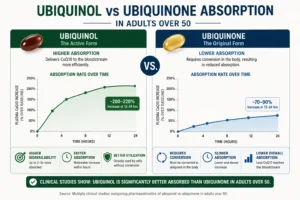
CoQ10 is a fat-soluble compound that shuttles electrons within mitochondria to generate ATP — your body’s energy currency. The ubiquinol form is already reduced and more absorbable for older adults.
Why it matters: Natural CoQ10 production peaks at 25 and drops steadily. By 50, levels may be 40–50 percent lower. Low CoQ10 correlates with fatigue, muscle weakness, and increased oxidative stress.
Evidence: A double-blind trial in Aging Clinical and Experimental Research gave 60 adults over 50 200 mg of ubiquinol daily. After 12 weeks, participants reported 38 percent less physical fatigue and a 30 percent increase in peak muscle power.
How to use it: Take 100–300 mg of ubiquinol with a meal containing fat. Morning is best because CoQ10 can be mildly stimulating.
Caution: May interact with blood pressure medications and blood thinners. Start low, go slow.
Bottom line: Ubiquinol directly fuels your aging mitochondria — expect noticeable energy differences in 4–6 weeks.
4. Magnesium Glycinate
Magnesium is a cofactor for over 300 enzymatic reactions, including DNA repair, protein synthesis, and nerve transmission. The glycinate form is highly absorbable and gentle on digestion.
Why it matters: Population studies show that up to 50 percent of adults over 50 consume less than the recommended daily allowance of magnesium. Deficiency links directly to poor sleep, muscle cramps, insulin resistance, and elevated blood pressure.
Evidence: A 2019 study in Nutrients measured magnesium status in 1,500 adults over 50. Those in the highest quartile of magnesium intake had a 34 percent lower risk of developing metabolic syndrome over five years.
How to use it: Take 200–400 mg of magnesium glycinate 30–60 minutes before bed. The glycine component also promotes relaxation and deeper sleep.
Caution: Kidney disease changes magnesium handling. Do not supplement without medical guidance if your kidney function is impaired.
Bottom line: Magnesium glycinate fixes the most common nutrient gap after 50 while improving sleep and muscle recovery.
5. Vitamin D3 with K2
Vitamin D3 regulates calcium absorption and immune function. Vitamin K2 directs calcium into bones and teeth rather than soft tissues like arteries. Together, they work as a team.
Why it matters: After 50, bone density declines, and arterial stiffness increases. Without enough D3, your body cannot absorb calcium. Without K2, that calcium may end up in your coronary arteries instead of your skeleton.
Evidence: A 2021 study in The Journal of Clinical Endocrinology & Metabolism followed 771 postmenopausal women for four years. Those taking D3 plus K2 maintained bone mineral density and showed 50 percent less arterial calcification progression compared to D3 alone.
How to use it: Look for a combined supplement with 2,000–4,000 IU of D3 and 100–200 mcg of K2 (as MK-7). Take with your largest meal containing fat.
Caution: Do not exceed 4,000 IU daily of D3 without testing your blood levels. Hypercalcemia is rare but serious.
Bottom line: D3 plus K2 protects both your skeleton and your arteries — two critical systems after 50.
6. Creatine Monohydrate
Creatine is an amino acid derivative stored in muscles and brain tissue. It regenerates ATP during high-intensity efforts and supports cognitive processing under metabolic stress.
Why it matters: Muscle mass declines about 1–2 percent per year after 50 — a process called sarcopenia. Creatine supplementation helps preserve lean mass, improves strength, and may buffer age-related cognitive fatigue.
Evidence: A 2022 meta-analysis in Medicine & Science in Sports & Exercise reviewed 24 trials on adults over 50. Creatine supplementation combined with resistance training increased muscle strength by 14 percent more than training alone and improved working memory scores.
How to use it: Take 3–5 grams of micronized creatine monohydrate daily, no loading phase needed. Mix into coffee, tea, or any liquid. Effects accumulate over 3–4 weeks.
Caution: If you have kidney disease, do not take creatine without nephrology supervision. Otherwise, it is one of the safest supplements available.
Bottom line: Creatine preserves muscle and brain function simultaneously — two benefits for the price of one.
7. Resveratrol
Resveratrol is a polyphenol found in grape skins, berries, and Japanese knotweed. It activates sirtuins — proteins linked to DNA repair and cellular stress resistance.
Why it matters: Sirtuin activity declines with age. Resveratrol mimics some effects of calorie restriction without the hunger, potentially improving metabolic flexibility and reducing oxidative damage.
Evidence: A 2018 human trial in Cell Metabolism gave 40 adults with metabolic syndrome 150 mg of resveratrol daily for 90 days. Participants showed improved insulin sensitivity, lower blood pressure, and reduced markers of liver inflammation compared to placebo.
How to use it: Take 150–500 mg of trans-resveratrol (the active isomer) with a fat source. Absorption is poor without fat.
Caution: Resveratrol can interact with blood thinners and some antidepressants. Start with a lower dose to assess tolerance.
Bottom line: Resveratrol is not a miracle pill, but it’s a solid addition for metabolic health and cellular defense.
Key Takeaway: The most urgent targets after 50 are falling NAD+ levels, chronic inflammation, mitochondrial decline, and common nutrient gaps (magnesium, vitamin D, omega-3s). Start with NR/NMN for cellular energy, omega-3s for brain and joint protection, and magnesium glycinate for sleep and muscle recovery. These three address the largest biological bottlenecks.
How to Choose Supplements You Can Trust
Walk into any health store or scroll through Amazon, and you’re flooded with options. Most are overpriced. Some are useless. A few are actively dangerous. Here’s how to separate real products from marketing noise.
Look for third-party testing. Never trust a label alone. Supplements are not regulated by the FDA like drugs. Independent testing seals — USP, NSF International, or ConsumerLab — confirm that what’s on the bottle matches what’s inside. No seal? Strong reason to move on.
Check the form, not just the ingredient. Magnesium citrate and magnesium glycinate are both magnesium, but glycinate absorbs better for most people over 50. CoQ10 as ubiquinol costs more but works better than ubiquinone at this age. Vitamin K2 as MK-7 stays active in your body longer than MK-4.
Avoid proprietary blends. If a label says “proprietary energy matrix” without listing exact milligram amounts for each ingredient, close the tab. You have a right to know how much of what you’re taking.
Start with one supplement at a time. Add a single new supplement every two weeks. Track how you feel — energy, sleep, digestion, mental clarity. If you start five at once and get a headache, you won’t know which one caused it. Discuss your full stack with a pharmacist or nutritionist who understands supplement interactions.
Common Mistakes and Red Flags to Avoid
Mistake #1: Chasing the newest “longevity hack.” Every month brings a new molecule — spermidine, urolithin A, pterostilbene. Most lack human data. Stick to the seven listed above. They have the strongest evidence for people over 50.
Mistake #2: Taking the wrong form. You could swallow 500 mg of magnesium oxide every day and absorb almost none. The form matters as much as the dose. Research your form before buying.
Mistake #3: Ignoring medication interactions. St. John’s wort, high-dose vitamin K, and even green tea extract can interfere with blood thinners, blood pressure drugs, and antidepressants. Your supplement stack is part of your medication list. Treat it that way.
Mistake #4: Expecting overnight results. Supplements support long-term cellular repair. You won’t feel younger in 48 hours. Give each intervention at least 8–12 weeks before judging effectiveness. Consistency beats intensity.
Frequently Asked Questions
Q1: What are longevity supplements for over 50?
Longevity supplements are specific nutrients that target the biological drivers of aging — declining NAD+, mitochondrial dysfunction, chronic inflammation, and nutrient depletion. For people over 50, these include NR/NMN, omega-3s, ubiquinol, magnesium glycinate, vitamin D3 with K2, creatine, and resveratrol. They don’t reverse age but may slow functional decline.
Q2: Are longevity supplements safe for everyone over 50?
No supplement is safe for every person. Those with kidney disease should avoid creatine and use magnesium only under supervision. Anyone on blood thinners needs caution with omega-3s and resveratrol. People with active cancer should avoid NR/NMN until discussing with their oncologist. Always disclose your supplement plan to your doctor.
Q3: How long does it take to see results from longevity supplements?
Magnesium glycinate may improve sleep within one to two weeks. Ubiquinol and creatine often show noticeable energy and strength changes in four to six weeks. NR/NMN and omega-3s work on cellular repair pathways that take eight to twelve weeks to translate into felt benefits like less fatigue or better recovery.
Q4: What is the biggest mistake people make with supplements after 50?
The biggest mistake is buying cheap, untested products with the wrong chemical forms. A $15 bottle of magnesium oxide is a waste of money. A “proprietary blend” hiding individual doses is a red flag. The second biggest mistake is starting five supplements at once and having no idea what works or causes side effects.
Q5: Who should avoid or be cautious about longevity supplements?
People with advanced kidney disease should avoid creatine and be very careful with magnesium. Anyone on prescription blood thinners (warfarin, apixaban, rivaroxaban) needs medical review before adding omega-3s, vitamin K2, or resveratrol. Those with a history of estrogen-sensitive cancer should discuss resveratrol with an oncologist.
Final Thoughts
You don’t need thirty bottles of expensive powders to age well. You need a handful of targeted interventions that address the specific biological breakdowns happening after 50. NAD+ precursors restore cellular energy. Omega-3s cool chronic inflammation. Magnesium glycinate fixes sleep and muscle cramps. That’s the core. Everything else is optional.
Bookmark this article and come back to it when you see a flashy ad for the next “breakthrough” supplement. Starting with just two or three proven options today will serve you better than chasing ten untested molecules next year. The best time to support your aging biology was ten years ago. The second best time is this morning.
This article is for general informational purposes only. It is not a substitute for professional advice, diagnosis, or treatment. Always consult a qualified professional before acting on any information in this article.
