

Proven: How to Increase Fiber Intake Naturally
Written by Vivekanand Singh, Health & Wellness Content Writer — Updated October 2026
Medical disclaimer: This article is for general informational purposes only. It is not a substitute for professional advice, diagnosis, or treatment. Always consult a qualified professional before acting on any information in this article.
You do not need expensive superfoods or fiber supplements to improve your daily fiber intake. Many useful options are already found in Indian kitchens: dal, chana, whole-wheat roti, vegetables, oats, guava, and other whole fruits.
The challenge is knowing how to combine these foods in practical portions without suddenly changing your entire diet.
The World Health Organization (WHO) recommends that adults consume at least 25 grams of naturally occurring dietary fiber per day. It also recommends at least 400 grams of fruit and vegetables combined daily for people older than 10 years. These are separate targets, not interchangeable measurements. WHO dietary guidance
This guide explains how to increase fiber intake naturally using affordable Indian foods, everyday meal swaps, and a simple meal plan. You will also learn how to increase fiber gradually, what to do about bloating, and when a high-fiber diet may not be appropriate.
Table of Contents
- Why Your Daily Fiber Intake Matters
- 8 Practical Ways to Increase Fiber Intake Naturally
- A Simple Indian Meal Plan to Get More Fiber
- Common Mistakes to Avoid
- Frequently Asked Questions
- Final Thoughts
Why Your Daily Fiber Intake Matters
Dietary fiber is the part of plant foods that your digestive system cannot fully break down. Different types of fiber have different effects: some help retain water and soften stool, some increase stool bulk, and certain fermentable fibers provide nourishment for gut microbes.
A diet containing a variety of fiber-rich foods can support regular bowel movements and contribute to overall digestive health. Some types of soluble fiber can also help lower LDL cholesterol, while fiber-rich meals may help you feel satisfied for longer.
However, fiber is not a miracle ingredient. Eating more of it does not automatically cause weight loss, cure every digestive complaint, or guarantee better blood glucose control.
The WHO recommends obtaining carbohydrates primarily from whole grains, vegetables, fruits, and pulses. The National Institute of Diabetes and Digestive and Kidney Diseases (NIDDK) also recommends dietary fiber as part of constipation management, with gradual increases to help the body adjust.
The practical goal: Build a varied diet that provides enough fiber for your needs without causing persistent discomfort.
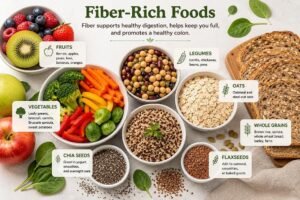
8 Practical Ways to Increase Fiber Intake Naturally
1. Add dal, chana, and rajma to your regular meals
Pulses are among the most practical sources of fiber and plant protein in an Indian diet. Lentils, chickpeas, kidney beans, and peas can help you increase fiber without relying on costly specialty foods.
Try these changes:
- Include dal with lunch or dinner.
- Prepare boiled chana chaat for an afternoon snack.
- Add rajma or chickpeas to a balanced meal.
- Include peas in poha, pulao, or vegetable dishes.
Start with portions you tolerate comfortably. Soaking dried beans when appropriate and cooking them thoroughly can improve preparation and digestibility.
Watch out: Pulses can cause gas, especially when you suddenly increase your intake. Add them gradually rather than doubling your portions overnight.
2. Replace some refined grains with whole grains
Whole grains retain more of their original grain components, including fiber-containing bran, than refined grains. Replacing some refined flour products with whole-grain alternatives is a straightforward way to improve your diet.
Affordable swaps include:
- Maida-based bread to whole-wheat bread.
- Refined-flour snacks to homemade whole-grain alternatives.
- Some white rice meals to brown rice or other suitable whole grains.
- Refined breakfast cereals to oats or dalia.
You do not need to eliminate white rice or every refined food. Focus on the overall pattern and make changes you can maintain.
Watch out: Products labelled “multigrain” are not necessarily high in fiber. Check the nutrition label and ingredient list before buying.
3. Choose whole fruit instead of juice
Whole fruits provide fiber along with water, vitamins, and other nutrients. Juicing usually removes much of the pulp, reducing the fiber compared with eating the whole fruit.
Good everyday options include:
- Guava
- Pears
- Oranges
- Apples with edible skin
- Other seasonal fruits you enjoy
Wash fruit carefully and eat the edible skin when appropriate. Carry a whole fruit to work or keep one available for an afternoon snack.
Watch out: Individual tolerance varies. If particular fruits cause digestive discomfort, adjust the variety and portion instead of forcing yourself to eat them.
4. Include vegetables at lunch and dinner
Vegetables add fiber and micronutrients while helping you build a varied eating pattern. Their fiber content varies by type and serving size, so eating a small salad alone may not meet your daily needs.
Try bhindi, carrots, peas, beans, cabbage, cauliflower, and leafy vegetables. Add vegetables to dal, poha, upma, omelettes, and homemade parathas.
Cooked vegetables may be easier to tolerate than large raw salads if you experience bloating.
Watch out: People with intestinal narrowing, bowel obstruction, or specific gastrointestinal conditions may require individualized dietary advice.
5. Upgrade breakfast with oats, dalia, or vegetable poha
Breakfast offers an easy opportunity to add fiber without changing every meal.
Try oats with fruit, vegetable dalia, poha with peas, or besan chilla with vegetables. Combining whole grains, vegetables, fruit, or pulses provides more variety than relying on a single ingredient.
For packaged cereals, compare fiber per serving and check added sugar. A product marketed as healthy may still contain relatively little fiber.
Watch out: If you are not accustomed to oats or whole grains, start with a comfortable portion and increase it gradually.
6. Add nuts and seeds in sensible portions
Almonds, peanuts, chia seeds, and flaxseeds can contribute fiber, although their amounts vary. They also provide other nutrients and can add variety to meals.
Sprinkle seeds over porridge, mix ground flaxseed into suitable dishes, or eat a modest portion of nuts as a snack.
Watch out: Nuts can cause severe allergic reactions in susceptible people. Nuts and seeds are also energy-dense, so large portions may not suit everyone’s needs.
7. Replace selected low-fiber snacks
Biscuits, chips, and many refined-flour snacks contain relatively little fiber. Replacing some of these foods with whole-food options can improve your overall dietary pattern.
Budget-friendly alternatives include roasted chana, whole fruit, suitable raw or cooked vegetables, and modest portions of nuts.
Compare nutrition labels rather than assuming every packaged snack is unhealthy or every product containing grains is high in fiber.
Watch out: Some roasted snacks contain substantial salt or added oil. Choose options that fit your overall dietary needs.
8. Increase fiber gradually and drink adequate fluids
This step matters just as much as choosing the right foods. A sudden increase in fiber can lead to gas, bloating, or abdominal discomfort because your digestive system needs time to adjust.
The NIDDK recommends increasing fiber a little at a time and drinking enough liquids to help fiber work effectively. Read the NIDDK guidance.
Try adding one fiber-rich food or an extra serving to your routine, then observe how you feel before making further changes.
Watch out: Do not automatically increase fluids if you have a prescribed fluid restriction. Seek medical advice before substantially increasing fiber if you have a bowel obstruction, intestinal narrowing, or a condition requiring a specialized diet.
Key takeaway: Build your meals around pulses, whole grains, vegetables, and whole fruits. Add nuts and seeds for variety, make gradual changes, and prioritize foods you can afford and enjoy consistently.
A Simple Indian Meal Plan to Get More Fiber
You can increase your fiber intake without following a complicated diet. The following example uses familiar foods and can be adjusted to your appetite, budget, and dietary requirements.
| Time | Example meal |
|---|---|
| Breakfast | Vegetable poha with peas or oats with fruit |
| Mid-morning | Guava, orange, or another whole fruit |
| Lunch | Whole-wheat roti, dal, seasonal sabzi, and salad if tolerated |
| Evening | Roasted chana or a modest portion of nuts |
| Dinner | Vegetable khichdi with pulses or roti with rajma and vegetables |
How do you know whether you are getting enough fiber?
Track your meals for three days. Record the types and approximate quantities of grains, pulses, vegetables, fruits, nuts, and seeds you eat.
Then identify the biggest gaps. If you rarely eat pulses, add dal or chana. If breakfast is mostly refined grains, try oats or dalia. If you rarely eat fruit, introduce a whole fruit as a snack.
The WHO’s adult reference point is at least 25 grams of naturally occurring dietary fiber daily. Other guidance varies with age and sex, so your individual target may differ.
Do not assume this sample meal plan automatically delivers 25 grams. Actual fiber intake depends on portion sizes, ingredients, preparation, and food composition.
Common Mistakes to Avoid
1. Increasing fiber too quickly. Large, sudden changes can cause discomfort. Add foods gradually.
2. Depending on one superfood. Chia seeds or oats alone cannot replace a varied diet. Combine several food groups.
3. Ignoring food labels. “Multigrain” and “healthy” do not guarantee high fiber. Compare the actual amounts per serving.
4. Forgetting hydration. Inadequate fluid intake may worsen constipation in some circumstances. Maintain appropriate hydration, following medical advice if you have fluid restrictions.
5. Assuming fiber fixes every digestive problem. Persistent constipation, severe abdominal pain, vomiting, blood in the stool, or inability to pass stool or gas needs medical assessment. Do not keep increasing fiber to treat potentially serious symptoms.
Frequently Asked Questions
1. What is the easiest way to increase fiber intake naturally?
Start with foods you already eat. Add dal to a meal, choose a whole fruit instead of juice, include vegetables at lunch and dinner, and replace some refined grains with whole grains. These changes are often more practical than buying supplements. Increase your portions gradually and keep track of your meals so you can identify where additional fiber would be useful.
2. How much fiber should an adult eat daily?
The WHO recommends at least 25 grams of naturally occurring dietary fiber per day for adults. Other authorities use recommendations that vary with age and sex; for example, NIDDK cites a range of 22–34 grams daily for adults. These figures are general references, not individualized prescriptions. Your healthcare professional can help determine an appropriate target if you have a medical condition or special dietary needs.
3. How long does it take for increased fiber to improve digestion?
Some people notice changes in bowel habits within days, while others need longer. Results depend on your starting diet, fiber sources, fluid intake, activity, and the underlying cause of symptoms. Increase fiber gradually and monitor your response. If constipation persists, worsens, or comes with concerning symptoms, seek medical advice rather than assuming you simply need more fiber.
4. Can eating more fiber help reduce belly fat?
Fiber-rich foods may help you feel fuller and can support weight management when they replace foods that provide more calories with fewer nutrients. However, fiber does not specifically burn belly fat, and no single food guarantees weight loss. Overall energy intake, physical activity, sleep, and long-term dietary habits matter. Choose a varied diet and avoid products promising rapid or targeted fat loss.
5. Who should be cautious about increasing fiber intake?
People with suspected bowel obstruction, intestinal narrowing, certain gastrointestinal conditions, or medical instructions to restrict particular foods should seek professional guidance before making a substantial change. A high-fiber diet may worsen symptoms in some situations. If you experience severe pain, vomiting, blood in your stool, or an inability to pass gas or stool, seek prompt medical care instead of trying to manage the problem with food alone.
Final Thoughts
The most effective way to increase fiber intake naturally is to build better habits around familiar foods. Dal, chana, whole grains, seasonal vegetables, and whole fruit can all contribute to a varied, affordable diet.
Start with one or two manageable changes, give your digestive system time to adjust, and track what works for you. You do not need to buy expensive products to begin.
Bookmark this guide and explore our related resource on 15 High-Fiber Indian Foods, including practical serving ideas, to make your next grocery list easier.
A healthier daily diet starts with the next meal, not a perfect meal plan.
Medical disclaimer: This article is for general informational purposes only. It is not a substitute for professional advice, diagnosis, or treatment. Always consult a qualified professional before acting on any information in this article.