
Introduction
Are you getting enough fibre from your daily meals? Traditional Indian foods such as dal, chana, whole-wheat roti, vegetables and fruit can help you increase your dietary fibre intake without relying on expensive supplements.
Choosing High-Fibre Indian Foods does not require a complicated diet plan. Simple changes, such as adding pulses to lunch, choosing whole fruit instead of juice and including vegetables in breakfast, can make your meals more fibre-rich.
Dietary fibre supports normal bowel movements and contributes to a balanced diet. However, the amount you consume depends on your food choices, portion sizes and preparation methods.
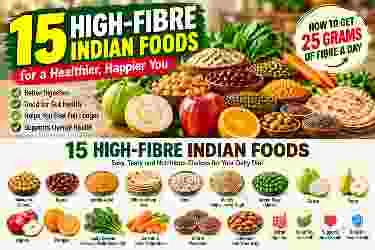
In this guide, discover 15 fibre-rich Indian food options, practical breakfast ideas and evidence-based tips for working towards 25 grams of fibre daily.

Why Is Dietary Fibre Important?
Dietary fibre is found in plant foods, including whole grains, pulses, fruits, vegetables, nuts and seeds.
According to the World Health Organization (WHO), adults should consume at least 25 grams of naturally occurring dietary fibre daily as part of a healthy diet.
Adequate fibre intake can help:
- Support regular bowel movements.
- Reduce the risk of constipation for many people.
- Contribute to fullness as part of balanced meals.
- Support healthy dietary patterns associated with better long-term health.
Fibre is not a treatment for every digestive problem. Individual needs may differ, particularly for people with certain gastrointestinal conditions.
15 High-Fibre Indian Foods to Include in Your Diet
The following foods are practical options for everyday Indian meals. Their exact fibre content depends on the variety, edible portion, preparation and serving size.
| Food | Practical way to include it |
|---|---|
| 1. Chickpeas (chana) | Add boiled chana to chaat, salads or curries. |
| 2. Rajma | Serve thoroughly cooked kidney beans with rice and vegetables. |
| 3. Lentils and dal | Include moong, masoor or chana dal in regular meals. |
| 4. Whole-wheat atta | Choose whole-wheat roti more often than refined-flour alternatives. |
| 5. Oats | Prepare vegetable oats or porridge with fruit. |
| 6. Bajra and jowar | Use these millets in rotis or other traditional dishes. |
| 7. Green peas (matar) | Add peas to poha, upma, pulao or sabzi. |
| 8. Guava | Enjoy washed whole guava as a snack. |
| 9. Pears | Eat the whole fruit, including its edible skin. |
| 10. Apples | Wash and eat with the skin when appropriate. |
| 11. Oranges | Choose whole oranges instead of relying mainly on juice. |
| 12. Leafy greens | Include spinach, amaranth leaves or methi in meals. |
| 13. Carrots and cabbage | Add them to salads, cooked vegetables or homemade dishes. |
| 14. Chia and flaxseeds | Add suitable portions to oats, curd or porridge. |
| 15. Almonds and other nuts | Use a small portion as a snack or meal topping. |
How Much Fibre Does Guava Provide?
The Indian Food Composition Tables 2017, published by ICMR–National Institute of Nutrition, report the following dietary fibre values per 100 grams of edible portion:
- White-fleshed guava: approximately 8.59 grams.
- Pink-fleshed guava: approximately 7.39 grams.
These are food-composition values, not a guarantee for every fruit. Variety, ripeness and actual edible weight can affect the amount you consume.
For other foods, check the relevant food entry and preparation state in the Indian Food Composition Tables rather than assuming that raw, cooked and dried foods have identical fibre values.
High-Fibre Indian Breakfast Ideas
A fibre-rich breakfast can be affordable and easy to prepare. Try these combinations:
1. Vegetable oats: Combine oats with peas, carrots and other vegetables.
2. Vegetable daliya: Use whole-grain wheat daliya and add vegetables.
3. Moong dal chilla: Serve with vegetables or another suitable side.
4. Chana chaat: Combine cooked chickpeas with onion, tomato and lemon.
5. Vegetable poha: Add peas and vegetables to increase the meal’s variety.
6. Whole-wheat vegetable paratha: Use whole-wheat flour and a vegetable filling.
7. Fruit and oats: Combine oats with whole fruit and a small portion of nuts or seeds.
The fibre content of each breakfast depends on the actual ingredients and quantities. Avoid labelling a dish high-fibre without checking its composition.
How to Get 25 Grams of Fibre a Day
Reaching a daily fibre target is usually easier when you spread fibre-rich foods across several meals instead of relying on one ingredient.
Here is a practical meal-planning framework:
- Breakfast: Vegetable oats, daliya or another whole-grain option.
- Mid-morning: A whole fruit, such as guava or an apple.
- Lunch: Dal, whole-wheat roti and vegetables.
- Evening snack: Chana or a suitable portion of nuts.
- Dinner: Rajma, lentils or another pulse with vegetables and a whole-grain food.
This is an example of meal distribution, not a verified 25-gram meal plan. To calculate your actual intake, record the ingredients and portions, then use reliable nutrient data to total the fibre.
The ICMR–National Institute of Nutrition provides Indian food-composition resources that can help you make more accurate estimates.
Tips for Increasing Fibre Without Excessive Bloating
If your current diet contains little fibre, increase your intake gradually.
- Add pulses, whole grains, fruits and vegetables in manageable portions.
- Drink adequate fluids, unless your healthcare professional has advised a fluid restriction.
- Increase fibre gradually rather than suddenly adding large amounts of bran or supplements.
- Notice how your body responds to particular foods.
- Seek medical advice for persistent digestive symptoms.
The US National Institute of Diabetes and Digestive and Kidney Diseases recommends increasing fibre gradually and consuming adequate liquids to help fibre work effectively.
Persistent constipation, blood in the stool, severe abdominal pain or other concerning symptoms should not be managed through dietary changes alone.
Frequently Asked Questions
Which Indian foods are rich in fibre?
Chickpeas, rajma, lentils, whole grains, millets, fruits, vegetables, nuts and seeds are useful dietary fibre sources. Their contribution depends on the portion and preparation.
What is a good high-fibre Indian breakfast?
Vegetable oats, daliya, chana chaat, moong dal chilla and vegetable poha are practical choices. Include whole grains, pulses or vegetables according to your preferences.
How can I get 25 grams of fibre a day?
Include a variety of pulses, whole grains, fruits and vegetables across your meals. Track your portions using reliable nutrient data if you want to estimate whether you reach the target.
Can eating more fibre cause bloating?
Increasing fibre too quickly can cause gas or bloating in some people. Gradual changes may improve tolerance. Persistent or severe symptoms deserve medical assessment.
Do I need a fibre supplement?
Not everyone needs one. Review your usual diet first and seek professional advice if you have ongoing constipation, a digestive condition or concerns about supplement use.
Final Thoughts
Eating more fibre does not require an expensive diet or a single miracle food. Familiar Indian ingredients such as dal, chana, rajma, whole grains, vegetables and fruit can help you build a more varied, fibre-rich eating pattern.
Start with small, sustainable changes, increase fibre gradually and pay attention to portion sizes. If you want to know whether you are reaching 25 grams daily, use verified food-composition data rather than guessing.
Medical disclaimer: This article provides general nutrition information and does not replace individual medical advice.
References
- World Health Organization. Carbohydrate Intake for Adults and Children: WHO Guideline.
- ICMR–National Institute of Nutrition. Indian Food Composition Tables 2017.
- National Institute of Diabetes and Digestive and Kidney Diseases. Eating, Diet, and Nutrition for Constipation.